Showing posts with label Microsoft. Show all posts

Friday, July 9, 2010

Microsoft: 46% Windows 7 installations are 64-bit


For the first time in history, 64-bit operating systems are gaining serious traction with the arrival of Windows 7. In a blog post today, Microsoft revealed that 46% of Windows 7 users are running a 64-bit version, which compares to only 11% of those on Vista and less than 1% on XP. Steam recently released stats showing an even higher adoption rate among its customers, with around two times more people running Windows 7 x64 than x86.

OEMs have finally embraced the architecture, with some converting their entire consumer lineups to 64-bit-only machines. NPD says that 77% of retail PCs sold in the US during April 2010 ran the updated architecture – but it's not just end users buying into 64-bit computing.

Gartner estimates that 75% of all businesses will ditch 32-bit systems by 2014, and Intel recently migrated to a 64-bit environment to take advantage of features such as support for more than 4GB of RAM and additional security benefits.

Thursday, July 8, 2010

Microsoft Xbox Live revenue estimated to top $1 billion


Microsoft's Xbox Live reportedly closed a record sales year for fiscal 2010, which ended June 30. According to estimates published by Bloomberg recently, the premium gaming service over this last year managed to break the $1 billion dollar mark collectively through subscriptions, movie and TV show sales, and other downloadable content.

Microsoft itself has been mum about specific sales figures, but the math seems about right: the financial news outfit simply multiplied the number of users Microsoft admits paid the annual Xbox Live fee -- about 12.5 million -- by the average price of $50 and came up with $625 million. They then took Xbox chief operating officer Dennis Durkin's remark at E3 that sales of downloadable content topped subscription revenue for the first time and you have a total upwards of $1.25 billion. By comparison, the company is estimated to have raked in $800 million a year earlier from Xbox Live.

With Microsoft making such a hefty sum from their hybrid subscriptions + virtual goods model it's no surprise rival Sony has taken notice and followed suit. Its PlayStation Network service has offered free multiplayer gaming to all console owners since the beginning, but at its E3 press conference last month, the company announced a new subscription plan dubbed PlayStation Plus offering premium content and services for a yearly $50 fee. Online revenue is crucial for both companies because sales of consoles themselves barely make up for the cost of building the hardware.

Saturday, July 3, 2010

Microsoft readying a multi-touch Arc mouse?


A new product listing for what is being called the "Microsoft Arc Touch Mouse" has prompted speculation that the software giant may be whipping up a rival to Apple's Magic Mouse. The device is listed with the product code RVF-00003 and has an MSRP of around $70 (the same as Apple's device), according to Long Zheng of istartedsomething. Zheng also notes that Microsoft registered the domain "arctouchmouse.com" in March, which is currently redirecting to Bing – a common practice for the company's placeholder sites.

You may recall a project from late 2009 that Microsoft was calling Mouse 2.0. As part of that research, the company was working on designs for a prototype multitouch mouse – one of which is pictured above. That specific unit featured a curved design similar to the existing Arc models, and it used FTIR to track multiple contact points. There's no telling if this is what's coming to market, but any new multitouch peripheral from Microsoft could bring some attention to development for native Windows touch applications, and we can't complain about that.

Friday, July 2, 2010

Microsoft intros InstaLoad battery technology, forgoes polarity


Microsoft has announced a new battery technology called InstaLoad that lets users install batteries in any direction, without regard to polarity. "Never again will people have to squint to see battery installation diagrams - the device simply works regardless if the battery is installed positive-side-up or positive-side-down," the company said.

Along with making life easier to consumers, Redmond believes InstaLoad could be handy in many industries, including law enforcement, military, construction, outdoor sporting, and camping. The technology is compatible with popular off-the-shelf disposable and rechargeable batteries in sizes such as CR123, AA, AAA, C or D.

Microsoft is offering a royalty-free license program to suppliers and manufacturers of accessibility products for people with hearing, vision or learning disabilities. You can find more information on other licensing options in the press release. Third parties are supposedly "lining up to endorse the technology" for use in their own products.

Two such companies are Duracell and flashlight-maker AE Light. There's no information on when we'll see InstaLoad used in products by those companies – or any others for that matter.

Thursday, July 1, 2010

Microsoft axes Kin phones, European launch cancelled


After an underwhelming launch response, Microsoft has essentially pulled the plug on its Kin phone project. The handsets began shipping only a few short weeks ago, and rumors last week suggested that only 500 devices were sold – yes, that's five hundred. According new reports, the folks who designed the Kin have been assimilated into the Windows Phone 7 team. Additionally, plans for a European release have been axed.

As for the US, Microsoft says it will continue to work with Verizon to sell existing phones. We're not sure whether that means production will continue for a while, or if they're just trying to move what's already in warehouses. For what it's worth, Verizon says the Kin "remains an important part" of its portfolio. That said, the carrier slashed prices by as much as 50% over the weekend, and that sure screams fire sale to us.

Even with the lower hardware prices, the Kin probably won't fly off shelves. Besides missing features, the biggest complaint we've heard is that the monthly fee is as high as more capable devices, such as the iPhone and Android-based smartphones, which also happen to be more appealing to the Kin's target demographic of teens and twenty-somethings.

Wednesday, June 23, 2010

Microsoft readies family-oriented Xbox 360 features


In a move that'll surely brighten the day of gamer families, Microsoft has announced the "Xbox Live Family Pack," which will knock about half off four Xbox Live Gold memberships. The initiative is reportedly intended to solve the problem of households sharing a single console and Xbox Live account, and it will include various family-specific features to make life easier on parents.

Along with four Gold memberships for $99.99, Xbox 360s will have a Family Center that will funnel billing and account management through one primary account. That account has the ability to purchase and dispense Microsoft Points to other members, as well as access to activity monitoring reports to "help encourage discussions about safer more balanced gaming and entertainment habits."

Redmond also plans to offer "exclusive family content and discounts," and it'll take parental controls to the next step with talk of a function that removes all mature games, movies and content from the dashboard. Parents will also be able to apply title exceptions to disallow inappropriate material, and Microsoft will offer "intelligent default settings for child, teen, and adult profiles."

The new family features will roll out this November alongside Microsoft's new Kinect motion controller.

Tuesday, June 15, 2010

New Xbox 360 shipping with 250GB HDD, Wi-Fi for $299, Kinect due Nov. 4 for $150


Microsoft today ended its E3 keynote with a bang, unveiling a leaner, meaner Xbox 360. The redesigned model occupies less space, runs "whisper-quiet," and gets some heavily upgraded accessories. We haven't spotted a specific name for the new iteration, but it's supposedly already shipping out to retailers and it should be on store shelves near you by next week.

Pricing will be the same as the old 120GB Elite model ($299), but the revamped unit has a built-in 250GB hard drive as well as 802.11n connectivity. Microsoft plans to keep selling the existing Elite Xbox 360 at a reduced fee of $199, while the basic Arcade system will sell for $149. It's unclear whether this pricing is permanent or if the company is just trying to gut remaining stock.

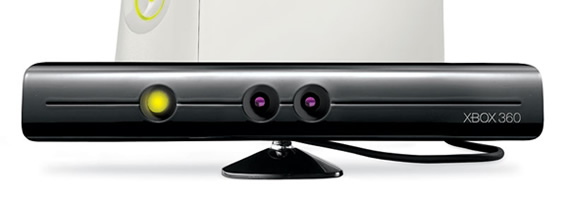
Additionally, Redmond has slapped a price tag and ship date on its motion controller. Kinect (formerly Project Natal) will hit stores on November 4 with a stand-alone cost of $150, which is in tune with previous rumors. It will be accompanied by at least 15 games when it launches, and you can take a look at that list after the break.

Monday, June 14, 2010

Project Natal to launch as Kinect, slimmer Xbox 360 possible


Microsoft has officially baptized its Xbox 360 motion-sensing system as Kinect, in a very unique press event yesterday night which included a jungle theme, Xbox Avatars wandering around on displays above attendees wearing white poncho throw-overs, and a Cirque du Soleil presentation. Using virtually no words, as usual, the French-Canadian circus troupe showed off the add-on formerly known as Project Natal and several titles through videos and live performances.

Aaron Greenberg, director of product management for Xbox 360 and Xbox Live, told that Sunday was all about entertainment, but they are prepared to give out more concrete details about Kinect at their E3 conference later today. Some of the news has already leaked early, with a list of games including Kinectimals (a virtual big-cat training sim), Kinect Sports (Microsoft's answer to Wii Sports with table tennis, boxing, bowling, soccer and more), Joyride (a kart-style racer), Kinect Adventures (a river-raft simulator), and dancing game Dance Central.

Other titles shown at the live presentation included a yoga trainer and a Star Wars game in which you play a light saber-wielding Jedi. If motion-controlled gaming is not your thing, though, don't fret. Microsoft also promised its conference will have a large emphasis on "core games" such as Halo: Reach, Gears of War 3, and Fable III.

Video chat is also on the menu, and it will apparently have support for up to four users at once. Perhaps more interestingly, rumors are abuzz that a slimmer Xbox 360 design might be announced at E3, with leaked ads and pictures of a new motherboard doing the rounds. The unit is expected to feature a 250GB hard drive and have built-in Wi-Fi.

Thursday, June 10, 2010

t News Page 2 12345 Microsoft quietly pushes Firefox extension in toolbar update


It seems Microsoft is back to pushing stealth updates to unsuspecting Windows users via its Windows Update mechanism. As part of its monthly 'Patch Tuesday' cycle, the company pushed out a range of updates this week, fixing vulnerabilities in its operating system and other applications. Among those, however, the company quietly included a browser extension for IE and Firefox to fix a URL handling issue in the Bing toolbar -- whether you have it installed or not.

The update in question, KB982217, is labeled "Update for Microsoft Search Enhancement Pack" and marked as an Important update rather than Optional. This means the extension will be installed either automatically, if the user has Automatic Updates on, or manually when the user clicks Install, as Important updates are checked by default. What makes matters worse is that the update's knowledge base article says nothing about installing an extension or add-on.

There doesn't seem to be any security implications to this add-on's background installation, but as you can imagine Mozilla is not particularly amused by having Microsoft silently updating their browser -- and Firefox users probably won't be either. If you don't appreciate the extension cluttering up your Firefox, or simply don't use Bing's bar, it's safe to remove it just as you would with other extensions -- you can also delete the Firefox Extension folder from "C:\Program Files\Microsoft\Search Enhancement Pack\Search Helper\" to make sure it's gone from your Firefox install.

Wednesday, June 9, 2010

Microsoft expands Games on Demand for Windows library


Microsoft is stepping up its efforts in the digital distribution market with a new deal that will bring titles from the likes of Capcom, Rockstar, THQ, Ubisoft and others to their Games on Demand for Windows platform "day-and-date" with their release in stores. This should give a much need boost to the service's games library, which is still fairly limited when compared to Valve's Steam and other online gaming venues.

Microsoft says that beginning today with the release of "Prince of Persia: The Forgotten Sands", new non-Live titles will launch on Games on Demand every week, with more than 100 new titles joining the portfolio by year's end. To celebrate their latest addition they are also offering Prince of Persia: Warrior Within and Prince of Persia: The Sands of Time, both for 75% off at just $2.49 each -- or 200 Microsoft Points.

The company opened up its Games on Demand digital distribution feature late yesterday as part of its Games for Windows Live platform. As the name suggests, Games on Demand allows users to purchase titles (using a credit card or redeeming Microsoft Points) and download them directly to their PCs. Prices are comparable to other digital distribution services, ranging from $9.99 to $49.99.If you are new to Games for Windows Live you can download the client here.

Tuesday, June 8, 2010

Microsoft launches free Office Web Apps


Microsoft has officially taken the wraps off their online productivity suite today as the company steps up its game against the likes of Google and Zoho. Dubbed Office Web Apps, the suite comprises cloud-based versions of Word, Excel, PowerPoint and OneNote, and is accessible to anyone with a Windows Live account. The roll out was supposedly limited to the US, UK, Ireland and Canada but it seems to be working in other countries too -- just not in their native language.

Users get free access to the tools, along with 25GB of storage from their SkyDrive accounts. Microsoft describes it as an online companion to Office 2010 that will give you the "best productivity experience across the PC, phone, and browser." Office Web Apps lets you view and edit documents in your web browser or desktop, regardless of where they were created first. You can also collaborate with multiple people simultaneously, and there's a built in version history feature that will let you to go back to older edits of your documents.

The user interface seems very polished and has a desktop-esque look and feel most of us are familiar with. Surprisingly, Office Web Apps appears to work just fine in Chrome, Firefox and even Opera, though the "Edit in 'Office program'" button won't work unless you are in Internet Explorer. The platform will seamlessly integrate with Microsoft's Office 2010, which launches to the public next week, and will be compatible with smartphone versions of Office 2010.

Monday, June 7, 2010

Microsoft readies Windows 7 SP1 public beta for July


The first public beta of service pack 1 (SP1) for Windows Server 2008 R2 and Windows 7 is coming by end of July. Microsoft confirmed this bit of news at their TechEd conference in New Orleans, after first sharing some details of the update a couple months ago. Echoing previous statements, the company said SP1 will bring a couple of big additions on the server side of things, but for home users it's mostly the usual patches and hotfixes rolled up into a single update.

Among the new features in Windows Server 2008 R2 is a graphics acceleration platform known as RemoteFX, which can deliver high-definition video, the full Aero interface, and even high-end apps like AutoCAD to remote clients using a new codec that runs in hardware or software. This means graphics hardware on the server will be able to handle the graphics needs of multiple virtual guests, which in turn need only an low-end card and a virtual GPU driver. The result is something very close to an old mainframe environment, with "terminals" that are smarter than their predecessors but still less expensive than PCs, requiring far less maintenance and consuming very little power under load.

The other major addition to Server 2008 R2 is called "Dynamic Memory," which allows virtual machine memory to be configured on the fly as applications need it. No exact dates were given for the final release of SP1 on Windows Server 2008 R2 and Windows 7, but rumors has been circulating that it will be before the end of this calendar year.

Friday, June 4, 2010

Microsoft reveals updated Windows Live Essentials suite


Microsoft has previewed a major refresh to its freely downloadable Windows Live Essentials suite, which includes Photo Gallery, Movie Maker, Messenger, Mail, Sync and others. According to CNET, Redmond hopes the overhaul will make Windows more appealing to consumers during this year's holiday season since no significant updates are planned for the OS itself.

The revamped version of Photo Gallery will add facial recognition to make life easier when it comes to managing and organizing tons of photos. Photo Gallery will also receive new editing tools, such as Photo Fuse, which lets you take the best parts from similar pictures and fuse them together. This feature is demonstrated in the image above, where a woman swaps her face in a group shot.

Movie Maker will get new themes, the ability to import photo caption data from Photo Gallery, export HD videos, and you'll be able to upload content directly to Facebook, and other sites. Mail will let you manage multiple email accounts, calendars, RSS feeds, contacts and newsgroups in one place. It'll also let you send up to 10GB of photos per email, chat via IM in the inbox, and more.

Thursday, June 3, 2010

Microsoft unveils Windows Embedded Compact 7 for tablets


Microsoft has unveiled a version of Windows 7 designed specifically for tablets and other specialized devices. The platform, dubbed Windows Embedded Compact 7, is expected to be released to manufacturing in the fourth quarter, but can already be downloaded from Microsoft's Web site in its preview form. Details are a bit slim at the moment, but it seems to be a compartmentalized version of Windows 7 compatible with non-Intel architectures.

Features listed in the official product page include an updated version of Internet Explorer with support for Silverlight and Adobe Flash 10.1, MPEG4 and HD video playback, support for Microsoft Exchange 2010, Microsoft Office and Adobe PDF viewers, and Windows 7 Device Stage for transferring files between a mobile device and a PC. A multi-touch interface is also mentioned, complete with custom gestures like panning and pinch zooming.

One of the first tablets to launch with Windows Embedded Compact 7 will reportedly be the recently announced Asus Eee Pad EP121. Microsoft has posted a few videos of the new operating system here, showcasing its "connected experiences", "rich user experiences", and platform reliability.

Saturday, May 29, 2010

MS to sell 30 million Windows Phone 7 handsets by 2011?


Say what you will about Microsoft's previous mobile efforts, but there's no denying the company is firing on all thrusters with Windows Phone 7. During a presentation at ReMIX in France, Redmond cited IDC data suggesting it will ship 30 million WP7 handsets by the end of 2011. For comparison, the company only shipped 3.7 million Windows Mobile phones last winter, according to Gartner.

Microsoft plans to meet that ambitious goal by riding the mounting wave of people adopting smartphones. It's expected that 40% of the handsets sold next year will be smartphones, which compares to an estimated 14% this year. Of course, Microsoft's competitors undoubtedly have the same intentions.

Android phones are gaining serious traction and Apple has managed to carve out a healthy chunk of the mobile arena since the launch of its iPhone in 2007, shipping upwards of 50 million units. With a new model due next month and the potential arrival of CDMA iterations, the iPhone isn't going anywhere anytime soon.

Friday, May 21, 2010

Bethesda dev: Microsoft should allow non-gaming Natal apps


In the run-up to Natal's debut, more and more developers have gotten the chance to see Microsoft's upcoming motion-sensing peripheral in action. Among them is Bethesda' production director Ashley Cheng. Writing on his blog, Cheng said he was "blown away" by the potential of Natal and believes that Microsoft should take a page out of Apple's book and open up the device to non-gaming applications. In his view, Natal "seems wasted on games" but if the company were to provide access to the device's API then hobbyist developers could really take things to a new level.


Cheng's comments follow similar calls for 'openness' from Valve CEO Gabe Newell regarding the PlayStation 3, and Ubisoft calling both Natal and the PlayStation Move "revolutionary".

Indeed, Microsoft has expressed interest in taking its motion-sensing technology beyond console gaming. Without delving too much into details, Bill Gates said about a year ago that Natal will also come to Windows and that its depth-sensing camera won't be limited to gaming use, but for media consumption as a whole. He also said Natal could even find a place in the business world for interacting in meetings, communicate and collaborate.

Initially, however, the focus will more likely be on gaming. Project Natal should finally get a more consumer-friendly name at E3 in Los Angeles next month, where Microsoft is expected to officially launch the device.