Showing posts with label Tablet PC. Show all posts

Wednesday, June 9, 2010

Notion Ink Adam on track, non-Tegra models on the table


Notion Ink is cooking up one of the more promising tablets we've seen thus far, and although the so-called Adam has been subject of delay rumors lately, the company says its highly-anticipated slate is right on track for a Q3 2010 launch. Furthermore, according to Notion Ink founder Rohan Shravan, Notion Ink has just secured its final round of funding. The investors remained unnamed, but their cash could supposedly fuel the production of around 100,000 Adams per month.

Shravan also dropped word of the potential launch of cheaper slate models. Until now, we've known about two versions of the Adam: one with an outdoor-readable Pixel Qi display, and another with a regular LCD screen – both iterations are based on Nvidia's Tegra 2 SoC. Apparently, Notion Ink is considering the use of a second, cheaper platform, but there's no information about what chips are on the table.

Pricing is still a bit ambiguous, but earlier reports said the Adam would start at around $330 and soar up to $800 for a completely maxed out model. However, Shravan recently stated that Notion Ink has worked to get the products out at a more aggressive price than originally intended. Precisely how much more aggressive remains to be seen.

Thursday, June 3, 2010

Microsoft unveils Windows Embedded Compact 7 for tablets


Microsoft has unveiled a version of Windows 7 designed specifically for tablets and other specialized devices. The platform, dubbed Windows Embedded Compact 7, is expected to be released to manufacturing in the fourth quarter, but can already be downloaded from Microsoft's Web site in its preview form. Details are a bit slim at the moment, but it seems to be a compartmentalized version of Windows 7 compatible with non-Intel architectures.

Features listed in the official product page include an updated version of Internet Explorer with support for Silverlight and Adobe Flash 10.1, MPEG4 and HD video playback, support for Microsoft Exchange 2010, Microsoft Office and Adobe PDF viewers, and Windows 7 Device Stage for transferring files between a mobile device and a PC. A multi-touch interface is also mentioned, complete with custom gestures like panning and pinch zooming.

One of the first tablets to launch with Windows Embedded Compact 7 will reportedly be the recently announced Asus Eee Pad EP121. Microsoft has posted a few videos of the new operating system here, showcasing its "connected experiences", "rich user experiences", and platform reliability.

Tuesday, June 1, 2010

Asus announces two Eee Pad models and an e-book reader


After teasing its entry into the burgeoning tablet market for months, Asus today unveiled its first Eee Pad tablets running Windows software and an e-reader, dubbed Eee Tablet, with a note-taking function. The announcement included the 10-inch EP101TC running Windows Embedded Compact 7 (an updated version of Windows CE), and the 12-inch EP121 running Windows 7 Home Premium on an Intel Core 2 Duo CULV processor.

Asus claims the device can be used as a multimedia player, e-reader, Web browser, or, with the help of a keyboard docking station, a full-featured PC. The company didn't share much in the way of specs -- after all, the Eee Pad won't be on the market until early 2011 -- but said the "ultra-slim and light" device will include a webcam, USB port, HDMI-out, SD slot, and should offer 10 hours of battery life. Prices are expected to range between $399 and $449. Unfortunately, their rumored Google-android tablet was nowhere to be seen.

As for the Eee Tablet, Asus describes it as "one of the world's most accurate and sensitive digital note taking devices" which will give users the feel of writing on paper. It will be available in September for $199 to $299, and will feature an 8-inch grayscale display, two-megapixel camera to snap photos of slides or other subjects for notes later on, an electronic notepad, Wi-Fi, a media player and a battery life of 10 hours.

MSI unveils Windows 7, Android Wind Pad tablets


With Computex 2010 now in full swing, the first wave of Apple iPad competitors are finally breaking cover today starting with two tablet models from MSI. The Wind Pad 100 and 110 both have 10-inch multi-touch displays but vary sharply in hardware and software. Namely, the first packs a 1.66GHz Intel Atom Z530 processor and runs Windows 7 Ultimate, while the MSI Wind Pad 110 switches to a dual-core Nvidia Tegra 250 chip with Android.

The Wind Pad 100 has a customized, touch-friendly layer on top of Windows 7 to support Microsoft's normally desktop oriented operating system. It also has 2 USB ports, a webcam, 8-hour battery life, and an HDMI output for handling 720p HD video. Engadget got some hands-on time with the device and thus far they don't seem too impressed by it. Although it was quite light at 1.7 pounds, the plastic build felt quite cheap and overall the Wind Pad 100 was incredibly sluggish in terms of performance. It didn't help that the device is expected to retail for around $499.

Meanwhile, the Android-powered Wind Pad 110 should come in at about $100 cheaper with a price of $399. All we know in terms of specs so far, besides its 10" touch display, is that it has Wi-Fi, Bluetooth, a USB port and some form of video output. It also looks a bit more stylized than its Windows-based sibling and should have swappable back plates to change its appearance. No solid estimate on an expected release date was given other than "later this year."

Tuesday, May 25, 2010


After a press conference revealing few details at CES in January, and months of teasing through sporadic leaks to gadget blogs, Dell has officially announced launch plans and specs for its upcoming Android-based 'tablet' device. Formerly known as the Mini 5, the Dell Streak could very well be classified as a handheld with its 5-inch display. It has an ARM-based Snapdragon chipset and 1GHz processor, 2GB of storage (expandable to 32GB with a MicroSD card), a 5-megapixel camera, a front-facing camera, removable battery, and Wi-Fi, 3G, and Bluetooth connectivity.

At launch, the Streak will be running Android 1.6 (Donut), but it will receive an upgrade to the new Flash-capable Android 2.2 (Froyo) later this year. Dell's tablet offers support for voice and video calls, boast integrated Google Maps with turn-by-turn navigation, and will come bundled with a number of social apps like Twitter, Facebook and YouTube.

Pricing remains a mystery for now. The company said the Dell Streak will go on sale in the U.K. early next month through O2, and in the U.S. later this summer -- no 3G service partner was mentioned for this side of the Atlantic.

Friday, May 21, 2010

By Matthew DeCarlo, posted 4 days ago If you're keen on the tablet movement but can't bear to part with the familiar ways of a hardware keyboard, Ace


If you're keen on the tablet movement but can't bear to part with the familiar ways of a hardware keyboard, Acer has a proposition for you. The company has just rolled out its new Aspire Timeline 1825PT convertible tablet PC, which offers an 11.6-inch 1366x768 touchscreen, a 1.3GHz Intel Pentium ULV SU4100 or Core 2 Duo SU7300, 3GB or 4GB of DDR3 RAM (supports up to 8GB), and 250GB or 320GB of storage.

Also on the table is a six-cell battery pledging up to eight hours of runtime, a webcam, a media card slot, HDMI and VGA-out, gigabit Ethernet, 802.11a/b/g/n wireless, optional Bluetooth 2.1+EDR and 3G connectivity, as well as a multitouch trackpad. Along with Windows 7 Home Premium x64 and Microsoft's touch apps, Acer preloads its own touch-optimized software.

The Timeline 1825PT is currently available in the UK with a starting price of €600, and it should make its way over the pond sometime soon.

Nvidia Tegra 2 tablet prototype shown, seems promising


Nvidia let folks get up close and personal with a Foxconn-manufactured tablet prototype this evening, and based on early impressions, it's a keeper. The unnamed Android slate measures 8.9-inches and is powered by an Nvidia Tegra 2 system-on-a-chip -- which boasts eight independent processors, including a 1GHz dual-core ARM Cortex A9 CPU. There's also a gig of system memory, a front-mounted camera, two USB ports and the multi-touch WSVGA display.

When the Tegra 2 was first unveiled, Nvidia claimed the chip was four times faster than its predecessor. The SoC can make quick work of 3D games and HD video, all while consuming less power than Intel's Atom and Qualcomm's Snapdragon. Engadget had a brief hands-on with the slate and shot a 24-second video of it running a 3D football title, and Gizmodo has photos of it running another game.

There's no information on when the tablet will be finished, but we'd expect it to debut before the year is up.

Saturday, May 15, 2010

Sharp IS01 smartbook ships to developers


Sharp has begun shipping its IS01 smartbook to developers in Japan, while a consumer release is planned for June – sooner than the previously expected October launch. The developer version, JN-DK01, ships with an SDK, access to the Android SH Developers Square site, and contains Android 1.6 API along with Sharp's own extended API for "infrared data transfer, LED flashlight, camera, opening and closing [notifications], and file picker."

The IS01 is more compact than a conventional netbook-style device, toting a 5-inch 960x480 capacitive multitouch display, a trackball, 4GB of internal storage which is expandable via microSD, and a 1GHz Qualcomm Snapdragon processor. Other specs include an FM transmitter, 1Seg digital TV tuner, as well as EVDO modem and phone functionality, but developers won't have access to all those features initially – if ever, according to Pocketables.

It's worth noting that the unit has no Google apps, such as Gmail and YouTube, nor does it provide access to the Android Market. There's no word on pricing or availability to other regions.

Wednesday, May 12, 2010

Apple to fix iPad Wi-Fi issues with future software update


Apple has updated a support document to say that it will address iPad Wi-Fi issues in an upcoming software update. A handful of iPad owners have experienced issues with Wi-Fi connectivity, and in the meantime, the company has provided a few potential workarounds.

Apple says users who "consistently encounter issues connecting to a specific Wi-Fi network" should update their router's firmware. If you happen to be using an AirPort Base Station, check out this article for details on performing the update, otherwise the information should be readily available at your device manufacturer's website.

After updating your router, you should make sure you're using WPA or WPA2 wireless security, and not WEP. Next, you should renew your IP address by going to Settings > Wi-Fi > select your network > tap Renew Lease. Other suggestions include toggling Wi-Fi on and off, as well as ensuring that your screen brightness isn't at its lowest level (Settings > Brightness & Wallpaper).

Saturday, May 8, 2010

Archos 7 Home Tablet release bumped to June


Archos' 7-inch Android-based tablet went up for presale last month with an expected ship date of late April, but as you well know, April is behind us, and the Archos 7 Home Tablet has yet to officially launch. According to the company, some people who preordered the bargain-priced slate may receive it by the end of May, but the new US release window is June.

If you're interested, the device is still available for preorder on Amazon at a reasonable $199. The Android 1.6 tablet packs a 7-inch 800x480 resistive touchscreen, a 600MHz ARM 9 processor, and 8GB of storage into a very trim package, measuring less than half an inch thick and weighing well under a pound. It's rated for 7 hours of video or 44 hours of audio and it can handle up to 720p playback.

The Archos 7 Home Tablet is preloaded with a handful of core apps for instant messaging, reading e-books and so on, but it's backed by Archos' AppLib store rather than the Android Marketplace -- though you can install the full store with a little knowhow.

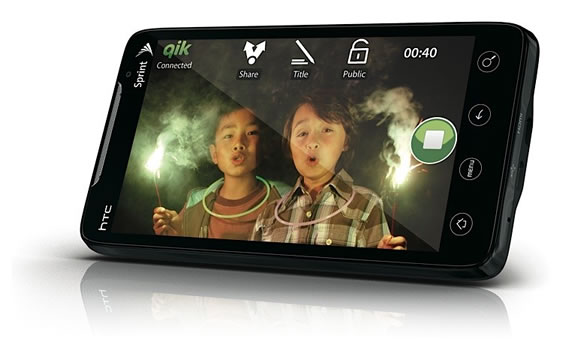
Sprint's HTC EVO 4G pre-orders opening this month


Sprint's first 3G/WiMAX-compatible smartphone is not expected to ship until sometime this summer, but it looks like pre-orders are just around the corner. A screenshot leaked from The Shack's (formerly Radio Shack) internal website suggests pre-orders for the much-anticipated HTC EVO will start "later this month," and lists some of the specs we already know: 4.3-inch 480 x 800 TFT display, 1 GHz Snapdragon processor, 1.3 megapixel front-facing camera, rear-facing 8 megapixel camera with auto-focus and 720p HD video recording, and MicroSD support (up to 32GB).

Apple is widely expected to announce its 4th generation iPhone at its Worldwide Developer Conference next month, so any head start that Sprint and HTC can get should be beneficial. The device will run Android 2.1 and has built-in mobile hotspot functionality for up to 8 devices to share its speedy signal -- though it's unclear if Sprint will charge extra for the tethering service or include it like Verizon does with its Palm line.

Pricing is still unknown, but one of the many rumors pegs the device at around $200 with a two-year contract. There's no word on how much the plans for this HTC smartphone will cost.

Thursday, May 6, 2010

Intel pushes Atom into mobile arena with "Moorestown"


Intel made official today the release of the new Atom-based platform code-named “Moorestown”, crafted specifically for power conscious smartphone and tablet devices. Moorestown aims to offer substantially superior performance over current generation mobile devices without compromising power consumption.

The mobile platform Intel announced is known as a “system on a chip”, or SoC. This means Moorestown is actually not just a processor, but rather a bundle of technologies which include an Atom Z6xx CPU (Lincroft, the 45nm successor to Menlow), a MP20 controller hub (Langwell) and Briertown (Mixed signal IC). The new platform is expected to scale to 1.9GHz and decode 1080p video on-the-fly with built-in hardware graphics acceleration while still achieving roughly five hours of video playback or 10 days of standby time powered by a typical 1500mAh smartphone battery.

In contrast to Intel’s claims, one analyst questioned the viability of Intel’s new platform in the smartphone arena. An analyst at Rodman & Renshaw reminded us that Intel publicly announced only the next iteration of the Atom would offer power consumption low enough for smartphones; Unfortunately, Moorestown is not it. For this, we'll have to wait for the 32nm Cedarview which probably won't debut until 2011.

Despite Intel’s encouraging announcement, devices slated to show off Moorestown are not expected to hit production until the second-half of 2010. One such device will be the recently delayed LG GW990, a smartphone that features the “MeeGo” operating system. Also the foundation for Moblin, MeeGo is a heavily optimized Linux variant built specifically to take advantage of the Atom platform.

The mobile chipset market is a crowded one with huge industry players the likes of which include Texas Instruments, ARM, Qualcomm and Nvidia. Intel's revamped Atom is set to be a high performance offering, but can top-end performance and a customized Linux distro be enough for Intel carve out a sizeable share of the mobile market?

Asus ships HD-ready Eee PC Seashell 1005PR


Asus has cleared the HD-decoding Eee PC Seashell 1005PR for takeoff, and it should be available through various stateside retail channels as we speak. The device went up for preorder late last month and features a Broadcom Crystal HD decoder chip along with a 10.1" 1366x768 display, allowing users to access high-def content while on the run.


Also under the hood is a 1.66GHz Intel Atom N450 processor, a gig of RAM, 250GB of storage, 802.11 b/g/n Wi-Fi, Bluetooth 2.1, a 0.3-megapixel webcam, and Windows 7 Starter. The 1005PR pledges up to 11 hours of life on a six-cell battery, which isn't too outlandish since it relies on Broadcom's chip for HD playback rather than a proper GPU, such as Nvidia's Ion.

It's supposedly shipping via authorized resellers with an MSRP of $399.99, but Amazon still has it flagged as a preorder item.

Saturday, May 1, 2010

Aluminum-clad Asus Eee PC 1218 surfaces online


An unannounced Asus netbook has won a 2010 reddot design award, and as such, pictures have surfaced online. The Eee PC 1218 hasn't been publicly detailed, and very little information is available, but we like what we see. The brief snippet at AsusDesign.com says the system packs an optimal balance of usability and portability.

It mentions a "unique internal layout," which allows for a full array of ports to be positioned at the rear of the device, making it "easy to carry and visually uncluttered." Visible I/O includes VGA and HDMI-out, three USB ports, as well as Ethernet, headphone, microphone jacks -- nothing out of the ordinary.


The exterior housing is made with all silver or black-painted aluminum, and it has a webcam with a sliding cover to ensure privacy -- possibly useful for kids at the Lower Merion high school. There's no word on pricing or availability, but we're hoping for more information when Computex kicks off in June.

Sunday, April 25, 2010

Velocity Micro's sub-$300 Android 2.1 'Cruz' tablets surface


Yet another tablet product line has been unearthed, this time from custom PC maker Velocity Micro. The slates, called Cruz, are poised to take on both e-readers and tablets, and will reportedly appear over the coming months in two configurations: 4 x 3 and 16 x 9.

The upper-crust model will feature Android 2.1, a 7-inch color capacitive multitouch display, an 800MHz processor, expandable storage via SD card and USB, and a Web browser with Flash support. The company hasn't specifically mentioned the Android Market, but the tablets will have access to an open content portal through the "Cruz Market" and there's talk of apps for eBooks, magazines, video, music and games.


Velocity Micro is marketing its slates as the "world's first family of affordable touch screen ereaders and tablets," and although an official price hasn't been disclosed, Engadget reports that the series will be sub-$300. Cruz tablets are pegged for a July debut.

Sunday, April 18, 2010

Dell prepping 7 and 10" slates, pictures leaked


In addition to its pint-sized 5-inch Android slate, Dell is whipping up a couple of larger offerings. Pictures along with an internal memo have made their way to Engadget's inbox, and if they're anything to go on, Dell is preparing 7 and 10-inch iterations of the Streak.

Based on the early photos, the larger models are a spitting image of their greatest adversary -- Apple's iPad. That's not necessarily a bad thing, though. Despite the iPad's faults, it's still a pretty piece of hardware. When asked for more details, Dell simply said it "continually develops and tests new products" and that it doesn't comment on speculation.


According to Engadget, the smallest model will be available sometime this summer, the 7-inch version will follow in late 2010, and Dell's largest tablet will appear in early 2011. On a somewhat related note, information about the Aero's AT&T release was also leaked, and you can expect that to launch this June.

Monday, March 29, 2010

ASUS Eee PC T101MT headed to US in April for $499


Well beginning of April, you sure do like tablets for $499, don't ya? While the Eee PC T101MT has been available to suave Europeans since February, ASUS has let out word that the 10-inch, multitouch tablet will start shipping in the US sometime in April for $499. Not a bad deal considering the Pine Trail-powered netvertible has been been priced around 499 Euros overseas -- though we're unsure at this point of the final specs of the American T101MT and what version of Windows 7 it will boot. We'll be keeping our eyes peeled for it at the usual etailers, but before you head out and buy one you may want to wait on our upcoming full review to see how this thing measures up to the other netvertibles out there.

Monday, March 22, 2010

HP Slate coming with Atom and Flash in June for €400?


The tablet market is expected to heat up big time this year with dozens of new products on the horizon, but only a handful are expected to launch in the immediate future -- namely the Apple iPad and HP Slate. While the fruit-flavored part has been fully detailed and is already available for pre-order, HP has shrouded its offering in mystery.

Many critics of the iPad (and boy are there a lot of them) hope the Slate will offer a more complete computing package at a competitive price, and it seems that may be the case. Spanish publication Clipset reports that the Slate will debut with a starting price of €400, or about $541. Straight currency conversions are generally inaccurate in determining cross-region sticker prices, so the Slate could potentially hit US shelves for less than the cheapest iPad.


HP's device is confirmed to feature an Intel Atom processor, USB connectivity, a memory card reader, a back-mounted webcam, Flash support, and runs Windows 7. The Slate is set for June debut in the US, and should land in Europe sometime "before September."

Enso's zenPad is the cheap Android tablet you've always wanted, available now


With so many concept Android tablets floating around lately we were inclined to just ignore this one -- until we learned two particularly interesting aspects: it starts at $155, and it's actually shipping now. It's the zenPad from Enso, a five-inch, 800 x 480 Android 1.6 tablet with 8GB of storage (on a replaceable microSD) that, for an additional $25, comes with GPS. It's powered by a 667MHz Samsung 6410 processor, pledges six hours of battery life, and has WiFi built-in while an external 3G adapter is just another $35. That means a fully max'd out unit with GPS and 3G would set you back $210 -- plus $25 for shipping. And yes, they are shipping now, as evidenced by a number of the things popping up on eBay. Sure, it doesn't look as fancy as the Dell Mini 5, but you won't have to fly to Shenzhen to get one. Video demonstration embedded after the break, but the footage was apparently encoded using some demo software, so beware nagging audio intrusions.